Afoot and light-hearted, I take to the open road,
Healthy, free, the world before me,
The long brown path before me, leading wherever I choose.
Henceforth I ask not good-fortune—I myself am good fortune;
Henceforth I whimper no more, postpone no more, need nothing,
Strong and content, I travel the open road.
- Walt Whitman, "Song of the Open Road"

Where Am I Today?

Teaching at the old Alma Mater.

Tuesday, August 7, 2007

Full Circle


On January 1, 2007, I was sitting here, at my grandma's house, thinking and blogging about the road ahead. Now I sit here, in the same exact place, thinking of the road I just travelled. Here are some lessons that I might never have learned otherwise...

We all play small parts in a very big world.

Being a foreigner has its perks. Being ignorant does not.

Reality TV still uses cue cards.

Travelling by yourself makes room for lots of thinking.

Working with 1400+ teenage girls evokes a plethora of emotions.

School uniforms reduce mufti mishaps.

Tom Joel plays a mean guitar.

"Everybody Dance Now" is the unofficial national anthem of New Zealand.

Living near a Cadbury factory is a dangerous thing.

The only thing that can kill you in the New Zealand wild is your own stupidity.

Escaping the city for a weekend is sweet as.

Pavlovas explode.

Sometimes the students you shake your head at the most are the ones you can never shake in your heart.

Driving on the left-hand side of the road isn't so scary -- even in a bite-sized Suzuki!

Living near the sea is the best way to re-charge life after being drained.

Surfing is not so easy...but falling isn't so bad either.

Latimer Square is a very dodgy place.

Text messaging can become all-consuming.

Not checking my inbox for a few days is okay.

Asian countries are same same...but different.

A smile goes a long way. Sometimes it's all one has to give.

People change your life -- sometimes in the most unsuspecting ways.

Riding a tuk-tuk at 2:30am in Bangkok is a terrifying experience...so is Pat Pong Street.

The smell of a durian fruit can knock a person out cold.

Flush toilets are a luxury to be celebrated. So is free toilet paper.

Sandflies are the devil incarnate.

Motorbike is to Asia as mini-van is to North America.

Ceramic tiles during the rainy season are a death trap waiting to snap.

The only saving grace to an 18-hour night bus ride is knowing that the person next to you won't care if you drool on her because she'll probably do the same.

Abandon all practice of the "10 Second Rule" while traveling in Asia.

Setting, living, and reaching a goal is one of the most rewarding experiences.

Counting calories in Thailand is as useless as a Dong in Hong Kong.

A Coke can has many uses.

Being a millionaire in Vietnam doesn't get you very much.

Tailor-made shopping is a lot of fun.

The best person to travel with is a best friend.

Things happen for a reason.

Home isn't just one place.

Being missed feels good...but coming home feels better.


Thanks for following along. Until the next adventure...

L.

Wednesday, August 1, 2007

Holla from Hong Kong

View from The Peak

Diana and I at the MRT station

Good Feng Shui

Faster than the blink of an eye...an accurate cliche for both the pace of life in Hong Kong and the amount of time I spent in this booming city. After spending time in so many Asian cities I thought one more might steal my soul...but Hong Kong kind of regenerated my spirits and eased my transition back into modern life.

I was really fortunate to be able to stay with my friend's mom, Sandra, who lives in Wan Chai on Hong Kong Island. She greeted me at the airport and helped me cart all my bags to her place on the uber-efficient MRT train and City Flyer bus. Such a treat to be back in the groove with decent public transport. We visited the wet market in Wan Chai and had some Chinese food to start the day. It's awesome to tour around with a local who speaks the language, because already we've been in restaurants that don't even offer an English menu so it's all a leap of faith!

Sandra and I headed into Mainland China for some much-anticipated shopping that culminated in a 2-hour full-body massage for $8 (there are definitely some redeeming features to the hustle-and-bustle!) Nearly missed the last train back to Hong Kong, but arrived to a deserted Wan Chai at about 1am.

As fate would have it my friend, Diana, from university accepted a teaching position in Hong Kong and was arriving in the city this week to start getting settled and organised for the upcoming school year. We got to spend some time catching up over a cold frappucino and a round-trip on the Star Ferry. Also caught the latest Harry Potter movie at the flashy IFC Centre in the financial district.

Caught a magnificent view of Hong Kong from The Peak -- the viewing venue at the top of Hong Kong Island with a commanding view of the Kowloon side, plus the south side of the island where the smoke-stacks stand as a tall reminder of all those tags that say, "Made in China."

Not too sure what to expect on my budget flight home, but at this point I'm just ready to grab a pillow and slap on my eye-mask for a much-needed snooze. Getting really excited to see the smiles waiting in Vancouver...

Thanks for reading,

L.

Thursday, July 26, 2007

200 Days and the Countdown Begins


Just like the first 100 days, the last 100 days have evaporated before my eyes. I hit 100 days away while we were travelling the North Island of New Zealand on our term break roadie...and those memories seem so long ago. A lot has been accomplished in the past three months, and now there are only 7 days until I'm back on Canadian soil, and 11 days until I'm back on Mountain Standard Time.

I have one week left in Asia and I'm finding it hard to come to terms with the end of my travels. I'm very excited to be home to see all the friends and family that I miss so much (and sleep in a decent bed!), but I am pretty blue about ending my explorations. However, I think I will continue to travel in my heart as I annotate my photo albums to any keen ear.

I'll be thinking of words to write my final blog as I enjoy the next week in Vietnam and Hong Kong, and then gather my reflections while I'm in Vancouver for a few days. One thought that has weighed on my mind the whole time I've been away -- from Los Angeles to the Cook Islands, through New Zealand and across Asia -- is that the biggest culture shock might very well be my return to Canadian life. We've been laughing about how cheap we will be, especially after 2 months of asking, "is that your best price?" or inquiring about "happy hour" deals and such. Paying $5 for a meal is going to be a BIG splurge. I've consciously enjoyed the fact that our biggest stress has been organizing bus rides and choosing fabrics and leathers for our tailor-made goods.

At this point, the things I am looking most forward to when I get back home are:
1) catching up with family and friends
2) an Ice Capp from Timmy's
3) organised traffic and a LACK of honking
4) showers that do not soak the entire bathroom floor
5) home-made perogies

Things I am not looking forward to:
1) unpacking
2) a drained bank account
3) paperwork
4) enormous Gull Lake mosquitoes
5) a lack of ocean

More to come. Heading to Halong Bay.

Thanks for reading.

L.

Monday, July 16, 2007

Saturday, July 14, 2007

Capturing Cambodia


It was a long and winding road to Siem Reap, in fact, this memorable bus ride took nearly 16 hours! There are a lot of transport and accommodation scams operating in Thailand and Cambodia, and it seems as though our bus ride was one of them. We departed Bangkok at 8am, and after about 40 minutes our bus started driving about 15km/hr on the shoulder of the busy highway, raising a few eyebrows on board. In broken English our driver told us something was "wrong" with the bus and that we'd pull over at the service station to get it fixed and wait for a new bus. So we got off and before anyone could even look at the bus we were herded back on for another frustrating snail-paced drive. Finally, after much commotion among passengers, another bus DID show up to take us to the Cambodian border. We were now 3 hours behind schedule, which meant that we'd be seeing a lot of Cambodia in the dark.

The border between Thailand and Cambodia has a bit of a reputation among traveller's as being a bit dodgy. Thankfully, after our exhausting ride to the crossing we didn't have any hassle with our paper work and got onto the next bus which was, to say the least, interesting. Basically, we'd been spoiled with cushioned seats and air-conditioning thus far, but now we were back to the basics. The bumpy ride along the potholed dirt road was an appropriate reminder that we were no longer in a developed country. After the sun went down I was fixated on the lightning storm that filled the sky ahead of us, and although I was certain we'd run into it, it stayed at bay, filling the sky with enough light to illuminate the countryside of western Cambodia.

It was nearly midnight when we arrived and I was really glad that we'd made accommodation arrangements prior to arriving in Siem Reap because the place our bus stopped was infested with crickets and all sorts of other undesirables. However, it was at this drop-spot that we met Mr Kinal, our Tuk-Tuk chauffeur for our 4 days in Siem Reap.

In the morning we loaded our wallets with local Riel ($4000 Riel = $1USD), and also made sure we carried an ample supply of American $1 bills for all the little things -- drinks, Tuk-Tuks, and fresh fruit. However, we realised that a smile goes a long way in Cambodia, a kind of universal currency.

Some of my most vivid memories of this trip will be of Cambodia. The fine details in the carvings at Banteay Srey, the breath-taking view of Angkor Wat's grandiosity, our kind Tuk-Tuk driver, the fresh baguettes that stand as a reminder of French colonization, the smell of burning incense, Pepsi bottles of petrol along the side of the road, the heat of the sun and the dust on my skin. The children -- and everything about them: walking or biking the long road to school in their navy and white uniforms (equip with a backpack and determination); their smiles and persistence; the way they successfully ride adult-sized bikes; their memorization of the capital cities of main tourist countries, and their laughter.

We decided that we didn't travel all this way to make a sweep of Angkor in one day, and that we really owed it to this historical site to stay a while and absorb all that we could with a three-day pass. Here's a break-down of our sightseeing, with notes on religious affiliations and building dates (and some thoughts on our explorations):

DAY 1:
Bayon (Buddhist, late 12th, early 13th)
Five entrances to this moated city fortress, each gate is crowned with 4 giant faces. The faces were likely crafted by separate artists, one specialising in the left-side, the other specialising in the right-side.

Baphuon (Hindu, mid 11th)
Huge temple-mountain, largely collapsed and in a state of restoration. Unique animal carvings, and a \n impressive walkway to the entrance.

Phimeanakas (Hindu, late 10th, early 11th)
Laterite and sandstone, the tallest scalable temple in the Angkor Thom area. Served as a king's temple, but few carvings have survived the weather and looting.

Terrace of the Elephants (Buddhist, late 12th)
2.5 metres tall, 300 meters in length, this terrace has scenes of warriors and dancers, along with impressive carved elephants on display across the front of Bauphon, Phimeanakas, and the Royal Palace areas.

Ta Keo (Hindu, late 10th, early 11th)
Plainly decorated temple-mountain dedicated to Shiva. Constructed completely of sandstone.

Ta Prohm (Buddhist, mid 12th - early 13th)
A sprawling complex covered in jungle growth, with lots of corridors and passageways. Massive fig and silk-cotton trees grow from the towers and corridors which creates some fantastic photo ops. It was originally constructed as a Buddhist monastery and was enormously wealthy in its time, boasting control over 3000 villages with thousands of support staff and vast stores of jewels and gold. This was definitely one of our favourites, and it is one of the shooting locations for Tomb Raider.


DAY 2
Banteay Srey (Hindu, late 10th)
Translates as "Citadel of the Woman," and there are lots of delicate and intricate carvings in pink sandstone, which makes the exploration of this temple a very unique experience.

Banteay Samre (Hindu, mid 12th)
Large, relatively flat temple with extensive restoration and its towers resemble Angkor Wat.

Pre Rup (Hindu, late 12th)
Architecturally and artistically superior temple-mountain, with an impressive view (you can see the middle tower of Angkor Wat from the top). Believed to be a funerary temple, and the main courtyard has a room that was likely used as a crematorium. A nice breeze at the top!

Banteay Kdei (Buddhist, late 12th early 13th)
Another sprawling monastic course, largely unrestored, and also overgrown with magnificent trees. Undergoing restoration, so a few areas are blocked off or propped up with scaffolding.

Angkor Wat (Hindu, early to mid 12th)
Visually, architecturally, and artistically breathtaking. A massive three-tiered pyramid crowned with five lotus-like towers rising 65 meters from ground level. It was built to be dedicated to the Hindu god, Vishnu, and the three peaks bear symbolic significance to Hindu mythology. The incredible moat around the premise has both aesthetic and symbolic significance. Can't remember the proper names at the moment, so I'll have to come back and fill in the gaps.
The bas-reliefs (frieze, or extensive carved storytelling walls) pack quite the visual impact if you are patient and walk the perimeter.
The climb to the top is challenging, and I had to take a deep breath to overcome my hesitation with the steep height. But the view from the top was, as expected, spectacular.


DAY 3
Angkor Wat
Back to see all that we missed yesterday.


Taking a break during our exploration of the temples to curl up in a window frame and enjoy the view and a cool breeze will be one of those places I escape to in my mind during times of noise and haste. So peaceful.


The story of Cambodia is told in the temple carvings, the modes of transport, the political affiliations boasted at residential entrances, the heaps of fried crickets for sale by the dozen, the wrinkles that line the faces of the monks, the desperation in the voices of those who beg or ask for help, the haunted hallways of Tuol Sleng Genocide Museum and the heavy presence of loss hanging in the air at the killing fields at Choeng Ek. Both stories alluded to here -- the ancient history and the recent genocide -- are stories that the world doesn't really know, and the Cambodian story is one that needs to be told. More than 2 million Cambodians were massacred by the Khmer Rouge during Pol Pot's regime, and over 243 killing sites have been identified in Cambodia. If you're interested in learning more, check out the film "The Killing Fields" or pick up "First They Killed My Father," a memoir by Luong Ung, a child during the revolution in the late 1970s.


part of the Cambodian diet - fried crickets

pondering life

a humble abode

This brings me to the Lotus flower, a natural presence in Asia. The lotus flower starts as a small flower down at the bottom of a pond in the mud and muck. It slowly grows up towards the waters surface continually moving towards the light. Once it come to the surface of the water the lotus flower begins to blossom and turn into a beautiful flower.

Within Hinduism and Buddhism the lotus flower has become a symbol for awakening to the spiritual reality of life. The meaning varies slightly between the two religions but essentially both religious traditions place importance on the lotus flower.


I was reminded of this as I admired the lotus flowers in many of the ponds around the temples of Angkor. Despite the violent and horrific not-so-distant history of this country and its people, it has entered into a state of admirable recovery. After a few days of subconscious pondering I realised that the lotus is a perfect symbol for Cambodia -- after such pain this country is moving in a better direction, slowly but surely. There is an understanding that education is a key and although it is out of reach for some, this may not always be the case. Cambodia is already a beautiful place, but it is rising into something even more remarkable.

I suspect that a trip to Cambodia in ten years would be an entirely different experience. This country is beginning to develop and there are signs of a budding oil industry that will most certainly increase the economic stability. It's hard to say what a boom in the economy might do for this country -- there is a fear that it might not end up in the right hands.

I'll fill in more thoughts as they spark. Thanks for reading.

L.

Sunday, June 24, 2007

The Trail to Thailand


Our time in Malaysia is coming to a quick close as we spend our last ringgits and pack our bags for the beach. Our one-hour flight from Penang (Malaysia) to Phuket (Thailand) today officially marks the end of our Malaysian travels and the beginning of our Thailand adventures.

It would be very difficult to sum-up Malaysia. Even though I've only been here for 12 days I feel like I've seen quite a variety. The evidence of British colonialism peeks through the strong Islamic, Chinese, and Indian cultures and it seems as though this country is able to embrace the cultural and religious differences that are as flavourful as the variety of foods from the street vendors.

We've seen Kuala Lumpur, Melaka, Cameron Highlands, Ipoh, Alor Setar, Langkawai, and
Penang. Off to Phuket, Thailand tomorrow.

My least favourite part about Asia so far are the toilets. Pictures and details to come.

I'm having some difficulties uploading pictures at this internet cafe, so keep checking back for new albums.

Thanks for reading,

L.

Thursday, June 14, 2007

Meeting up in Kuala Lumpur


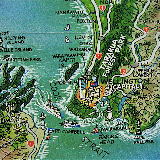
Destinations: Kuala Lumpur, Melaka, Ipoh, Cameron Highlands (not shown on this map -- east of Ipoh), and the island of Penang (capital city = George Town).

After much anticipation (and many hours of travel!) I met up with Erin and the train station in Kuala Lumpur and we've been catching up on life for the past few days. Erin has been in Malaysia for the past 6 weeks on a work study internship through the University of Lethbridge, so months ago we decided we would celebrate the completion of our university qualifications with some sightseeing in Asia. We're traveling with a skeletal itinerary in mind, but have big dreams about seeing this part of the world.


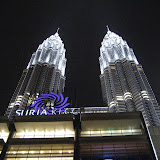
Erin and I, checking out the infamous Petronas Towers from the viewing window at the top of KL Tower. Erin and I took the elevator up the KL Tower to check out the panoramic views of the city. KL extends as far as the eye can see...skyscrapers, mosques, temples, playing fields, busy streets, schools -- the city is constantly moving. The weather is hot and humid, and the mid-afternoon is punctuated with thunderstorms. Flash floods are common, and Erin and I saw this first hand when we tried to leave the KL Tower.

A little bit about KL
Kuala Lumpur represents the heartbeat of Malaysia, serving as its cultural, commercial and transportation centre. It all began in the middle of the 19th century when a group of tin prospectors came to settle around the convergence of the Klang and Gombak rivers. It is a booming metropolitan centre with more than 1.3 million people from a variety of religious and cultural backgrounds. The ethnic majorities include Malays, Chinese, and Indians, and this diversity is clearly seen in the various cultural customs, religious beliefs, languages, cuisine, and architecture. The local currency is a ringgit (RM) and approx. 3 ringgits = 1 Canadian dollar. Food is cheap...a delicious meal costs about RM5, an LRT ticket costs anywhere from RM1 to RM3, and knock-off merchandise is cheap (if you're a confident barterer!)


While we were waiting for the afternoon downpour to stop we had our hands painted green and added our Canadian imprint to the local environmental awareness campaign.

We have been staying in Chinatown -- a beaming example of sensory overload. I flavourful taste of spicy Malaysian food - curries, chilies, spiced meats, etc. and there evidence of people as far as the eyes can see -- buildings, cars, motor bikes, garbage, and just people out and about. The sounds of car horns, fast trains, humming air conditioners, pouring rain, and people trying to barter fill the air. The humidity in the air clothes stick to bare skin, and the smells are almost too abundant and diverse to mention...varies from tantalising spices to down-right awful -- like rotting garbage, fish food, and wet dog. I've seen a few rats...eek! and a LOT of stray cats.


Keeping up with current events.


Yesterday Angus (another KL intern's visiting brother) and I checked out the Central Market and then hopped on the RapidKL (LRT) and got lost in the 6 floors of shopping madness at the KLCC shopping centre. Attached to the KLCC are the infamous Petronas Twin Towers -- architectural masterpieces that make KL's cityscape easy to identify. It's free to go across the observation bridge, however, they only let 1000 people visit each day, and the lineup for tickets in the morning is absolutely diabolical. Angus and I just took a view from the park space outside the towers, and Erin and I will try to get tickets on Monday.


More to come from Malaysia...

L.

Tuesday, June 12, 2007

A New Look for a New Leg


Singapore's Changi Airport is an amazing accomplishment in retail therapy and relaxation. I disembarked yesterday at 6pm local time and snooped around before checking into the transit hotel at the airport.

Last night I was on sensory overload -- drawn to the shops like a moth to the light. Perfume, cosmetics, liquor, and electronic gadgets galore -- this place has it all! Gucci, Prada, Burberry, Coach, Omega, Tiffany...and 7 Eleven! Not to mention beautiful gardens and green space in and out of the airport. Plus, a swimming pool, saunas, workout facilities, napping beds, and free internet (XB0x 360 too!). There's something for everyone and their credit card.

After walking around for a while I realized I was turning into a zombie, so I headed back to the transit hotel and fell asleep to some Asian TV.

My Singapore Airline boarding pass holds many perks -- one of which is the free city tour which was noted as "the only free thing in the city" by our hilarious tour guide. We stepped into a huge air-conditoned coach with leather seats (and seatbelts!) and worked our way through the diversity of this budding city.

Singapore is a small island country with lots of people and not enough room. Therefore, there are lots of highrises and the country buys 50% of its water from Malaysia because there is no more physical space to add to the existing 15 resevoirs. Singapore has an equatorial climate, thus there are no dramatic seasonal shifts and the temperature remains near the 30 degree mark year-round. It's also really humid because it rains a lot. Chewing gum is illegal and the crime rate is 0.007% -- and considering the diverse mix of cultures and religions, Singapore has been without political, racial, or religious riots for over 20 years. Despite the 4.6 million people who live in this city the traffic wasn't as diabolical as I was anticipating...and it seemed as if there was a suspicious lack of people out in the city.

I'm just waiting to catch my flight to Kuala Lumpur to meet up with Erin...so check back in a few days for some Malaysian memoirs!

Thanks for reading,

L.

Monday, June 11, 2007

Sumner Sunrise


In my last few days I'm taking some time to really absorb my surroundings. With the natural chaos of a teaching life, plus hosting my mom and trying to do some sightseeing, along with saying proper "goodbyes" to everyone, I've been up to my eyeballs with a "to do" list that mutates faster than the Bubonic plague. I got up early this morning to get to school before the rush and was taken aback by the beautiful sunrise over Sumner Beach. There were heaps of people out, but the sound of the morning waves prevailed over the "ooohs" and "awwws" of this stunning sunrise.

How lucky am I to have spent my last two months 20 feet from this? Can't wait to come back...

L.

Do What Inspires You


I think I will adopt this slogan as my offical trip manifesto...short, sweet, and perfectly accurate. The poster is plastered to a billboard column across the street from the Christchurch Arts Centre.

New Zealand has been in the works for over a decade -- can you believe it?!? It started as shapeless goal that became more precisely defined as years passed and knowledge grew. I knew I wanted to be a teacher from a very young age, but it wasn't until I was in junior high school that I began flirting with the idea of teaching and living overseas. I vascilated between a few different ideal destinations, but hit on New Zealand for some unknown reason when I started my teacher training five years ago. It's interesting how some places call our hearts more than others, and until I came here I couldn't really articulate a specific reason for choosing New Zealand over any other place on the planet. But after meeting all these wonderful people and travelling around these roads I couldn't imagine it any other way.

I started looking into New Zealand with serious intention during my first year at the University of Lethbridge and narrowed down a city. During this time I found out that others were planning on heading to NZ as well, but details were still blurry. Things really started coming together in July 2006, and I was blown away by the fast response I received from Avonside after my first inquiry.

So many people have asked, "why New Zealand?" and I still marvel in the sublime realisation that I am actually here, living through a long-term goal. It's been a really powerful teaching tool in the classroom because it's a good example of working through the challenges of goal setting and reaching. It inspires me to continue teaching and learning from all the active minds around me.

So as I get ready to wrap things up with my students I will leave them with this message, because I can back it up with an example that has been unbelievably gratifying and life-changing, and if anything it only inspires me to set higher goals that challenge me in my personal and professional life.

Newton's laws of motion, acceleration, and balance play a huge part in both the physical and emotional world. It's hard to ignore how these laws can be applied to inspiration -- just even thinking about how forces act on the body and mind. I propelled myself across the Pacific into a huge question mark, and I'm about to do the same as I prepare to travel Southeast Asia. Who knows what events will occur, what will make me laugh or cry, and who I will meet along the way...but it's so awesome to remain open to the wonder of it all...

Thanks for reading.

L.

"Stories Have a Job to Do" Recommending Mister Pip


Over the term break I was determined to read some contemporary New Zealand fiction. I voiced my intentions to the open ears in the English department and was flooded with suggestions. Ruth, my right-hand kiwi-lit enthusiast was quick to mention Mister Pip, a novel by New Zealand writer Lloyd Jones. I've been meaning to blog about it but kept putting the task on the blog back-burner. The final spark to get things moving was the announcement of its recent prestigious award, The Commonwealth Writers' Prize 2007: Overall Best Book Winner

One of life's most welcome gifts is finding a good book to read. We all take a gamble with our library cards and credit cards when choosing new reading material, but the payoff is priceless when we find that stack of pages that we cannot put down. We read at every possible moment -- on the bus, at interval, through the weekend, into the weee hours of the night (and I've even set my alarm clock to wake up early after a late night of reading!). Totally engrossed, involved, and enraptured. That's a good book.

Mister Pip had me roped me into the scenery and history of the Solomon Islands and inspired me to hunt down a copy of Great Expectations by Charles Dickens. I could not put down the story of Matilda's life.

Here's what the publisher has to say:

Lloyd Jones’ new novel is set mainly in a small village on Bougainville, where Matilda attends the school set up by the only white man in the village, Mr Watts. By his own admission he’s not much of a teacher and proceeds to educate the children by reading them Great Expectations. Matilda falls in love with the novel and the promise of the next chapter is what keeps her going; Pip’s story protects her from the horror of what is happening around her – helicopters menacing the skies above the village and rebel raids on the ground.

After several visits to the village by soldiers, the book goes missing and is then destroyed. Mr Watts encourages the children to retell the story, the whole being constructed from their remembered fragments. Later, when she has fled the island for Australia, Matilda reaches for a copy of Great Expectations in the school library and realises that Mr Watts was reading them his own version of the text, another ‘invention’ of the original.

"Mister Pip" is a love song to the power of the imagination and of storytelling. It shows how books can change lives.


Mister Pip is not yet available in Canada (according to Chapters.ca), and thus I feel slightly privileged to have caught a glimpse of the future (which makes up for the frustration of the repeat television series!). I love this book for its beautiful language -- steeped in metaphors and sensory description it has taken me on one of the most memorable journeys in my readers' mind.

I haven't been able to turn the "English Major" switch to "off," so during my reading I kept note of some of my most treasured passages. May they serve to heighten your interest in the story of Mister Pip.


"A book gives you permission to change your life" (p 135)

"Stories have a job to do. They can't just lie around like lazybone dogs. They have to teach you something" (p 75)

"My sense of time was governed by the school year -- when term began, when it ended, the holidays between" (p 10)

"I want this to be a place of light" (p 14)

"The surprising thing is where I found him...in a book. No one had told us kids to look there for a friend. Or that you could slip inside the skin of another, or travel to another place..." (p 20-21)

"As we progressed through the book something happened to me. At some point I felt myself enter the story" (p 40)

"The forge was home: it embraced all those things that give a life its shape. For me, it meant the bush tracks, the mountains that stood over us, the sea that sometimes ran away from us...it was the jungle and its constant reminder of how small you were, and how unimportant, compared to the giant trees and their canopy's greed for sunlight" (p 46-47)

"If everything we did made sense, the world would be a different place. Life would be less interesting, don't you think?" (p 80)

"A dream is a story that no one else will get to hear or read. Thanks to dreams, in the history of the galaxy the world has been reinvented more often than there are stars" (p 160)

"Dreams are nervy things -- all it takes is for one stern word to be spoken in their direction and they shrivel up and die" (p 165)

"I only knew the man who took us kids by the hand and taught us how to reimagine the world, and to see the possibility of change, to welcome it into our lives. Your ship could come in at any time, and that ship could take many forms" (p 211)

"My Mr Dickens had taught ever one of us kids that our voice was special, and we should remember this whenever we used it, and remember that whatever else happened to us in our lives our voice could never be taken away from us" (p 220)

"We have all lost our possessions and many of us our homes," he said. "But these losses, severe though they may seem, remind us of what no person can take, and that is our minds and our imaginations" (p 107)

"No one in the history of your short lives has used the same voice as you with which to say your name. This is yours. Your special gift that no one can ever take from you" (p 108)


I'm gearing up for the next leg of my trip and will be reading Great Expectations with thoughts of Mister Pip and the Solomon Islands on my mind. I'd love to hear your thoughts on the story should a copy find its way into your hands.

Thanks for reading.

L.


Friday, June 1, 2007

An Intern Teacher's Final Report


The final assignment for this internship is a written report that reflects upon my teaching experience. This document presents my thoughts and incorporates reports from my Teacher Mentors, Administrator, and Faculty Mentor. The following excerpt is from my section of the report.

Introduction
He Whakatauki
Ka tangi te Tītī,
Ka tangi te Kākā,
Ka tangi hoki ahau,
Tīhei Mauri ora!

He mihi aroha kau ake ki a koutou ngā kaiwhakaako. Tuatahi māku ka tuku te mihi atu ki ngā kaiwhakaako o t e Whare Wānanga o Lethbridge Tuarua ki ngā kaiwhakaako o te kura tuarua o Otakaro mai i Otautahi ki Aotearoa.
Nā koutou i hikitia tēnei kaupapa ka taea e au ki te tūtuki i ngā whāinga i mua.
Nō reira, kei te mihi arohanui ki a koutou katoa!


A Proverb
This is the cry of the Tītī,
This is the cry of the Kākā,
This is my cry.
Tis the breath of life!

Greetings of love to all of the teachers.
First, from the University of Lethbridge,
second from teachers of Avonside Girls’ High School, New Zealand.
You have all lifted me so that I was able to reach my goals that were in front of me.
Therefore it is with much love that I greet you one and all.


The journey to Avonside Girls’ High School in Christchurch, New Zealand has been a memorable learning opportunity. It has been about teaching, living, learning, traveling, exploring, and pushing personal limits. It has been about challenging myself to become a better teacher for myself and for others.

I chose Avonside for a number of reasons, but those at the top of the list include: working in an atmosphere of tradition and reputation; first-hand experience in a single-sex educational environment; and an opportunity to immerse myself in the culture and geography of New Zealand. These features forged a steep learning curve that I wanted to climb because I knew it would make me a better teacher.

For the duration of my fifteen-week practicum I have been under the mentorship supervision of Tom Joel and Anna McNeill, and have also been privileged to receive the support of an experienced English department and a welcoming staff. I have been responsible for the delivery of English course material at three curriculum levels: Year 9, Year 10, Year 11 (NCEA Level 1), and have taught units on poetry, short stories, film studies, a novel study, creative writing, and Romeo and Juliet. It has also been my responsibility to prepare and evaluate senior students for two internally assessed national standards in media presentation and creative writing.


Classroom Organisation and Management of Student Behaviour

It is my belief that a classroom must be a purposeful learning environment. There is a need for good routines, procedures, and variety in teaching and learning strategies. Since I started a new school year with my students, I found myself in constant consideration of best practices in terms of organizational structure. Also, being in a different country created a bit of gray area in terms of acceptable and appropriate methods for organization and discipline, therefore it was imperative that I communicate with my colleagues whenever I was unsure of procedures.

I have learned that in order to be an effective teacher I must have my classroom organised physically and strategically. In the early weeks of Term One classroom management was difficult because I was still learning names and personalities. I have practiced being firm, but kind, when dealing with assignments, deadlines, and disruptive behaviour.

Planning and Preparation
Navigating a new curriculum and a new education system has marked a very steep learning curve. It was not until mid-way through my practicum that I really felt I could make sense of the curricular framework enough to explain it to someone else.

My official timetable was decided just a few days before I stepped into my classrooms. As a result, I had an overwhelming sense of being behind right from the beginning. I need to remind myself that not every lesson I teach has to be self-created – there is something to be said for “tried-and-true” lessons and practices. My generation of teachers has grown up with the Internet as a powerful teaching tool, but even though technology is intended to make our teaching lives easier, it too can be time-consuming and an overwhelming burden.


Techniques of Instruction
When planning my lessons and units I tried to follow a practical instructional model: enter→explore→extend. Conceptualizing this progression proved to be successful in ensuring that material was introduced and explained, and in many cases that real-world relevance or current events could help extend and relate the content to the context of a student’s life.
I think that varying methods of instruction keeps students (and teachers!) engaged. Alternating between student- and teacher-led discussions, and integrating differentiated, cooperative learning strategies such as jigsaw/expert groups can produce some powerful results. I kept a copy of Bloom’s Taxonomy close to my planning books to help me formulate assignments with graduated complexity.

Evaluation of Student Learning

One of the overarching challenges of this final internship has been the need to learn a new education system, especially curriculum and guidelines for assessment. On the same token, it has been a challenge that I will likely experience again in my career. The New Zealand Qualifications Authority (NZQA) requires that students achieve specific standards in their educational assessments. Learning and planning with this in mind was a task that got easier as I became more comfortable with the standards associated with the curricular objectives.

As the primary teacher for my students I was responsible for preparing the first round of reports on student progress. Because these reports went home before any major assessments, the feedback focused on observations of attitude, organizational habits, attendance, and participation. The build-up of marking and observation prior to reports was a sturdy reminder to stagger due dates for assignments. I was also responsible for meeting parents on designated Parent-Teacher Interview evenings to discuss the report results. Anticipation for these brief five-minute time slots was nerve-racking, but it was helpful to steer the conversation around qualitative results and set goals that involved home and school.

Personal and Professional Attributes
After four practicums at the high school level I still firmly believe that I am best suited to teach junior and senior level students. Not only do I enjoy the age group, but the curriculum is extensive and engaging and allows the teacher to plan with personal strengths in mind.

Professionally, I view my strengths as directly related to my passion for English. As a teacher I am in a unique position to use both my knowledge and life experiences as teaching tools to make course content accessible and relevant. Teaching at an all-girls school provided me with an opportunity to question how I was going to empower female students to be independent and self-directed young women who are global and critical thinkers, while at the same time reminding them it is through literature and interaction that we learn about ourselves and the world that surrounds us.

Teaching is about much more than just blocks of instructional time and lesson plans -- it is about everything that goes on in and around the classroom: successful and not-so-successful lessons, improvisations, and the moments of engagement that spark discussion and learning that did not formerly exist on any written plan. Being in–tune with the rhythm of the class has allowed me to grab hold of teachable moments and run with the natural electricity generated by genuine student interest.

Summary

This professional internship has reminded me of the two-part objective of an international experience: to teach and to learn. My learning has taken place beyond the walls of a conventional classroom – in conversations with colleagues, chaperoning school trips, and embarking on road trips. I have seen this country with my own eyes, met some of its most amazing people, and challenged my comfort zone.

I realize that teaching is not only an occupation propelled by the need to transmit and acquire knowledge, it is also about fostering compassionate, respectful, and trusting relationships with students, colleagues, and other human beings. It is a profession that encourages ongoing inquisition and constant adaptability. This international experience has been a powerful reminder that teachers must first be learners, and that travel is an excellent and worthy investment. A rich travel life is an invaluable teaching tool and I hope to bring to my future classrooms a knowledge and awareness of the world that will positively influence and enrich my teaching.

This internship concludes a five-year post-secondary study in Education. From the first step in 2001, I have climbed a steep learning curve and stopped at intervals to look back at the ground covered. The journey has been full of peaks and valleys, plateaus and steep inclines. Along the way I have learned that it is easy to travel with tunnel vision – looking for and focusing on the obstacles that may stand in the way and pose a potential risk – but it is more rewarding to look up and around to take in the whole view and see how the last leg of the trip has helped get me to the place I am currently standing. In the grand scheme of my career this internship is only one of many base camps on a mountain larger than Everest, but with perseverance comes improved strength and confidence and more magnificent views.

Kia ora.


Thanks for reading.

L.

Monday, May 28, 2007

Doing a Good Deed


It’s been ages since I thought about what it takes to earn a badge for my Brownie sash, but recently one of my Year 9 students asked me if I would be interested in helping her earn one for hers. The criteria for earning the “Kiwi Culture” badge include inviting a recent immigrant to New Zealand to find out the differences between New Zealand and their homeland. Although I haven’t immigrated, I guess my 5 months in the country was enough to qualify.

As I was preparing for my presentation to the Sumner Girl Guide group, I was thinking about some of the lessons I learned during my time as a Brownie. Leave things in a better state than you found them; care for the environment; and do one good deed each day. These are all simple lessons, with far-reaching implications. Are we all doing at least one good deed each day?

So we played a round of “Duck-Duck-Moose” and got so caught up in slideshow photos and questions that we didn’t have enough time to sing “Land of the Silver Birch.” We made some pancakes covered in maple syrup, and concluded the evening with some specially imported Canadian Girl Guide cookies (which, for the record, are different than their New Zealand tea-biscuit counterpart).

The girls were keen to ask questions about the photos in my slideshow and I gave them a handout with Canadian facts (including the lyrics to our two national anthems: “O Canada!” and “The Hockey Song” – supported by the theme to “Hockey Night in Canada”. All that was missing was a coffee and donut from Tim Horton’s.

A great opportunity to boast about my country and encourage the girls to consider the magnificent size of our world.

Thanks for reading.

L.

Sunday, May 20, 2007

Flat Whites and another Maple Leaf


The first Flat White at the Yellow Rocket

My mom had a VERY busy first day in Christchurch. First, a quick look at Avonside, then to the Arts Centre for a peek at the market, then over to the Yellow Rocket in Cathedral Square for a bagel and flat white (while listening to the Sunday morning church bells), and then we had a drive through the city (thanks to Iri for lending me her flash SUV for the luggage haul!).


At the Christchurch Art Centre

We eventually made it out to Sumner for some unpacking and another flat white at Poseidon in Sumner where we watched the sun start to set before heading back for one of Marie and Richard's divine home-cooked meals and a home-made Pavlova. Some of you might need to consult the online kiwi dictionary.

More to come as these two maple leafs find their way among kiwis...

Thanks for reading!

L.

Thursday, May 10, 2007

Recipe for Year 10 Outdoor Education Camp


Mix the following ingredients:

(portions may vary)

60 Year 10 girls, age 14-15
9 Year 13 leaders
5 Avonside teachers (1 teacher-in-charge, 1 friendly dragon, 1 enthusiastic Welsh-Kiwi, 1 Canadian teacher trainee, and 1 uber-supportive dean)
8-9 Boyle River instructors

1 mud run
60 flying kiwis
½ day mountain tramp
1 hour solo
1 nightline course
1 zillion billion sandflies
15kilos mashed potatoes
1 bedtime story
2-minute showers

Add the following to the above mixture for flavour:
high ropes and/or low ropes, pesky fire alarms, wet (and muddy!) clothing, lollies, cleaning duty, pushing personal boundaries.

Serve and enjoy!


The past three days have been a blur of excitement at the Boyle River Outdoor Education Centre.

It is an Avonside tradition to have Year 10s attend the Boyle for outdoor pursuits and bonding activities. I was fortunate to be able to take three days away from my other classes to spend some time with my Year 10 class. A lot of effort goes into organizing a camp experience, and in the end, a few glitches didn’t detract from the quality time with students, staff, and the great NZ outdoors.

Camp was full of fun activities, challenges, and responsibilities. Although the whole experience stands as a memorable event, there are two activities that paint a particularly evocative image for the devoted blog reader…the mud run and the solo.

Our half-day tramp up and over the mountain culminated with a run through the marshland mud. Never in my life have I seen such a sight! The trail to the main puddle was soggy and unforgiving, but nothing prepared me for the waist-deep mud at the end of the path. Continuous use of the site means that the area has expanded considerably and can accommodate many eager mud-bathers! The girls were having a blast, and no matter how hard I tried to stay mud-free the girls tried extra hard to make sure that I had mud-covered hugs and muddy face paint.


Our tramp out of the area sucked me in – literally! After leaving the mud pool we had to walk out of the marshland and I quickly learned that if I stopped in one position for too long I was immediately up to my thighs in mud. At one point I had to get the girls to yank me out! A good reminder that we all need a helping hand…

My memories of the mud run will be with me for as long as the mud stains on my socks!


One of the evening activities is a “solo” experience in the forest. The solo is notorious for stirring up anxiety and fear in the girls because it requires them to sit alone, in the dark, for about 45 minutes. This is how it goes: after dark, a group of campers are led by a Boyle instructor onto a well-marked and tramped trail. The instructor drops individual students off along the pathway to sit, without a torch (flashlight). After the last student is dropped off, the instructor adds a bit more time to the clock before heading back to gather the girls.

Students are not supposed to talk or communicate with each other, they are encouraged to sit, look, and think. Some girls cry, some girls sleep – some don’t do much of anything at all. My eyes were absolutely fixated on the stars in the New Zealand night sky.

I have spent a great part of my life in cities, and as a result parts of the night sky have been hidden and distorted by the perpetual lights of electricity and the hazy cover of pollution. I was taken aback by how bright the sky is at night when all the distractions of the human footprint are removed.

I could see the cluster of stars that form the Milky Way and my trained eyes are now quick to spot the Southern Cross. Looking at the stars and pondering infinity, galaxies, and universes has a very humbling effect. The voice of my university astronomy professor found its way into my head, reminding me of the mathematical and scientific precision of the universe – a magnificent kind of ordered beauty.

Once I got acquainted with my new surrounding I let my mind wander. The illuminated constellations of the southern hemisphere reminded me of all things that had to happen for me to be standing on a pathway in the forest by the Boyle River on the South Island of New Zealand.

This was such a unique experience for me because NEVER, in my Canadian life, would I sit in the mountain forest by myself for an hour – something would sniff me out and gobble me up! The New Zealand forest is not full of bears, cougars, porcupines, skunks, badgers, foxes, wolves, etc. – a harmless possum might waddle by, or some sandflies might be tempted by bare skin, but in the grand scheme of things it’s probably one of the safest places to be “solo.”

The three days passed by so quickly, hardly enough time to take it all in. The weather was ideal, and I dare say I saw a more pleasant side of my year 10s. I raised my voice, laughed, jumped in the mud, and got some sleep. I think this opportunity to teach and learn in the outdoor classroom was a really positive experience for all of us.


Thanks for reading,

L.

Tuesday, April 24, 2007

Older...and Wiser?


Today I turned 23 in New Zealand…and tomorrow I turn 23 in Canada. Thanks to the efforts of staff, students, family, and friends, I felt surrounded by warm birthday wishes as I celebrated overseas. My students sang for me, and Anna brought delicious treats to the English department for all to enjoy. The “icing” on the cake was the delightful news that the year 9 form class that Anna and I share was recognized as an outstanding bunch of girls for their organization, effort, enthusiasm, and all-round positive attitudes and achievements. They’re having a movie afternoon with “nibbles,” goodies, and John Tucker.

In the early days of my twenty-third year I am reflecting on the things I’ve done to make it this far. I’ve only had twenty-three years…not much in the grand scheme of things -- I can’t imagine all that I’ll know by the time I’m 50!

When my brother was young he asked my mom what the dinosaurs were like. I still remember her reaction…partly adoration of her young son who couldn’t differentiate between Jurassic and present day, and partly hypersensitive to the number of wrinkles setting in on her skin. You see, the older people get the more reluctant they seem to reveal their age. They hide their embarrassment behind excuses like, “Oh, I’ve just dated myself,” or grunt their age under a muffled cough.

I’ve always taken umbrage with reactions such as these, mainly because age is something that we ought to be proud of. When we are young children we dream of being adults; when we are adults we yearn for the carefree state of youth; and when we reach the age of 65 and are eligible for the senior menu options or reduced rates at Norwich Union, it all of a sudden becomes cool to be old again. Funny how things come full-circle.

If we’re going to be ashamed of anything it ought to be our moral mistakes, not our position on the hill of life. We earn our wrinkles and gray hair, and just because I don’t have any yet I look forward to earning them as proof of a life lived. (That said, I’m not about to ditch my eye cream or collagen moisturizer!).

I am a young person and a young teacher. I’ve got a lot to learn and wrinkles and gray hairs to earn along the way. At the moment I am in New Zealand, teaching and learning from the people and the open road, actively adding to my repertoire of life experiences that will undoubtedly inform my teaching life for the rest of my career.

Thanks for reading,

L.

Monday, April 23, 2007

The Rest is Down Hill...


Our Great New Zealand Roadie has come to an official end. I feel we covered a lot of ground (2,298 km to be exact!) in a relatively short period of time, and I have a new-found appreciation for this country and its people. Plus, my geographical understanding has definitely benefited from all the navigating! New Zealand is such a wonderful place to be, and the Kiwi’s we encountered along the way were friendly and hospitable.

Highlights

- Kayaking along the coast of the Abel Tasman National Park
- Jumping out of an airplane at 13,000 feet!
- The “uplifting” feeling of the gale force winds atop the Kaitaki Inter-Island ferry across the Cook Strait;
- Cathedral Cove and the magnificent views from the Coromandel Peninsula;
- Driving down 90 Mile Beach (and having our driver sing me “Happy Birthday” in Maori);
- All the accumulated inside jokes that now exist between the four of us;
- Seeing things for the first time;

Lowlights
- the sketchy and cramped bus ride from Christchurch to Nelson
- the lingering pain in my feet after a 24km hike
- losing Chris to a “small” fire in his Christchurch apartment
- the outhouses in the national parks.
- wearing the same clothes for two weeks…with only one stop for laundry.

Travel and exploration have something to teach all of us. I have a slight suspicion that those of you who would identify yourselves as faithful blog readers have learned vicariously through my postings. Learning doesn’t stop when the plane lands or the car parks…and the good will inevitably mingle with the not-so-good, but the experiences and moments offer more depth and excitement to the fabric of my life.

Thanks for reading.

L.

Sunday, April 22, 2007

Term Break in a Nutshell

Here are the "Coles Notes" for those of you short on time, but curious about where we've been and what we've seen.


Daily details from our New Zealand Term Break roadie!

Friday, April 6 (8:30am) - Depart Christchurch for Nelson. Arrive in Nelson after a LONG and WINDY bus ride.


Saturday, April 7 - Arrive in Marahau (in the Abel Tasman National Park) at "The Barn" backpackers. Slept in a tipi.


Sunday, April 8 - Marahau. Day-long Kayak along the Abel Tasman coast. 12km from Marahau to Anchorage Bay. Slept in a tipi.


Monday, April 9 - Marahau. Skydiving and relaxing. Slept in a cabin with a stellar sea view.


Tuesday, April 10 - Marahau. 24km hike along the Abel Tasman coast from Marahau to Torrent Bay. Again, slept in the sea view cottage.


Wednesday, April 11 - Crossed the Cook Strait on a ferry. Arrived in Wellington, picked up the rental car, and got settled in at the Downtown Backpackers. Very sketch.


Thursday, April 12 - Wellington. Spent the majority of the day at Te Papa (The Museum of New Zealand) and soaked up the rich flavours of culture and art.


Friday, April 13 - Lower Hutt/Lake Taupo.


Saturday, April 14 - Waitomo Caves/Rotorua. Staying at "Cactus Jacks" backpackers in a theme room!

Sunday, April 15 - Rotorua. Smelly thermal pools.


Monday, April 16 - Whitianga, Coromandel Peninsula.


Tuesday, April 17 - Whitianga, Coromandel Peninsula. Shakespeare's Cliff, Cooks Bay, Lone Kauri, Cathedral Cove, Hot Water Beach.


Wednesday, April 18 - 90 Mile Beach


Thursday, April 19 - Cape Reinga and 90 Mile Beach


Friday, April 20 - Auckland. Sky Tower and such.


Saturday, April 21 - Fly from Auckland to Chch.


Sunday, April 22 - Back in Christchurch, doing laundry.

Tuesday, April 17, 2007

100 Days Away from Home…it might have been otherwise


Looking East


Today the reading on the “Count Up Clock” caught me by surprise. It marked a moment in my life worth celebrating – 100 days away from the comforts and surroundings of home. I left Calgary on January 7, 2007, and 100 days later I am in the beautiful Coromandel Peninsula on the North Island of New Zealand.

Life could have been very different.

The thought of “what might have been” got me thinking about a poem I heard 3 years ago when I stepped into Brian Madill’s classroom at LTCHS in Red Deer. First, Brian is an awe-inspiring teacher who taught me more about teaching and learning in a 5-day practicum than I could have ever learned otherwise. He continues to be one of my muses.

The poem “Otherwise” was written by Jane Kenyon in 1996. It is a poem of gratitude about the simple pleasures in life and it stands as a strong of all the small fortunes we experience every day. Kenyon died several years ago of cancer.


Otherwise

I got out of bed
on two strong legs.
It might have been
otherwise. I ate
cereal, sweet
milk, ripe, flawless
peach. It might
have been otherwise.
I took the dog uphill
to the birch wood.
All morning I did
the work I love.

At noon I lay down
with my mate. It might
have been otherwise.
We ate dinner together
at a table with silver
candlesticks. It might
have been otherwise.
I slept in a bed
in a room with paintings
on the walls, and
planned another day
just like this day.
But one day, I know,
it will be otherwise.


Kenyon’s poem has carved a place in my personal life as well as my teaching life. I share this with students during studies of poetry and ask them to write their own “Otherwise” statements or poems. The results fit a broad spectrum -- humorous, silly, serious, poignant.

So on this 100th day I remind myself that things could have been otherwise. I could be sitting at my dorm desk in Lethbridge, listening to the howling wind and watching the snow fall as I cram last-minute details into my mind for one of many finals I would be preparing for as the semester winds down. I might be putting the finishing (or beginning!) touches on final essays. I might be watching “Prison Break” with Sam or Leah, or packing my things for a move back to Rimbey. I might have been out on the town for Tanner’s birthday, or recovering from Last-Class-Bash.

Today I was humbled by all the big things surrounding me – the huge passageway of Cathedral Cove; the vast and unbound Pacific Ocean; the colossal Kauri Tree that towered over me. At one point, while on the beach, I let some sand run through my fingers and I examined the last grain that remained in my palm. This triggered another poetic connection to my favourite poet, William Blake, who said “to see a world in a grain of sand…” and I was reminded of the fact that all these magnificent “big” things surrounding me are all made up of smaller fragments. Without all the little things there would be no beautiful beaches, no big trees, and no voluminous oceans.


A view of Lonely Bay from Shakespeare's Cliff


From inside Cathedral Cove


The Lone Kauri Tree -- look closer and you'll see me at the base.

My life would be very different if it were not for New Zealand. This opportunity has been so necessary in learning about myself and the world I live in…but more importantly each day is a reminder to appreciate the little things, and each breathtaking scene is like an alarm clock prompting me to appreciate the fact that I am currently in New Zealand, achieving goals and living a dream. It could have been otherwise.

We all play a small part in the bigger picture, and every person and place we meet with our eyes, mind, heart, and soul leaves an impression – big or small – and every encounter and experience adds more to our life story. It could be otherwise.

Thanks for reading,

L.

Monday, April 16, 2007

And then there were three...


Chris made a hasty departure from Rotorua this morning to return to Christchurch. His landlord contacted him to inform him of a “small fire” that broke out in the apartment next to his as a result of an electrical short. His wall is a bit scorched, and some things may or may not be melted beyond repair. In order to get all of the repairs complete in a hurry, Chris’s stuff had to be moved to a less-than-secure location. Needless to say, he was a bit concerned and decided to cut his road trip short. Or maybe it was his way of saying, “I’m tired of traveling with three girls, waiting for hair straighteners to heat-up and cool-down, hearing less-than-ladylike conversation, and seeing the darker side of females.” Don’t worry, Chris, we all think you deserve a medal.

Sadly, any group photos from this point on will make it seem like this was a girls-only road trip. We might have to experiment with PhotoShop.

On the bright side, there’s a bit more breathing room in the Toyota with one less body and luggage. Shannon and I had heaps of fun blaring the stereo and singing along to our homemade country CD on the way to pick Lindsay up in Thames.

The drive up to Whitianga on the east coast of the Coromandel Peninsula was really scenic -- and windy, with sharp shoulders and dangerous curves – definitely not for the faint of heart. This has been the most challenging stretch of road to this point, and we’ll be traveling it again on our way back to the main Auckland-bound highway. The twists and turns were worth is because the Coromandel Peninsula has been my favourite part of our trip.

Shannon might beg to differ. The road left her feeling a bit like a running shoe in a dryer. Her carsickness lasted a painful 24 hours, so she’s had to experience the Coromandel vicariously through the photographs Lindsay and I took on our tiki-tour along the coast.

So Chris is gone and the car is lighter, but our list of accomplishments is getting longer and the days ahead promise more good times on the open road.

Until the next exciting update,

L.

Thursday, April 12, 2007

A Challenge for my Readers


What is unusual about this picture? Post your guesses by clicking the "Comments" section at the end of this entry. I'll post my own response soon.

L.

Wednesday, April 11, 2007

Crossing the Cook Strait


I’m writing from a reclining chair on the Kaitaki (“challenger”), one of the ferries in the Inter-Islander fleet. She is the largest, with room for 1600 passengers and 600 cars. There are heaps of luxuries aboard, including a cinema (playing new theatrical releases), cafes, food court, bars, live bands, TV lounges, video games, playgrounds -- and I just heard an announcement for an on-board magic show!


The Cook Strait, between the North and South Islands, is the main waterway between the mountain ranges of each island. It acts as a funnel for air flow onto the country and as a result is a particularly windy area. It takes approximately 3 hours to sail from Picton (South Island) to Wellington (North Island also the capital city of NZ). In adverse weather conditions the ride can take MUCH longer (someone mentioned 24 hours!). The narrowest part is about 19 kilometers wide.

The ship sails through sounds and points before it hits the open ocean. The scenery is stunning (we’re getting accustomed to the “wow” effect that hits us frequently). We passed:

1. Cook’s Lookout (marked with a monument commemorating the spot from which Captain Cook first sighted the stretch of water that was to bear his name);
2. Whekenui Bay (the place where, according to Maori legend, Kupe caught and killed the giant octopus he had pursued across the ocean to NZ);
3. Karori Rip (where two tides meet, making a noticeable rip. Rough even on calm days);
4. Sinclair Head (winter home from grey fur seals);
5. Red Rocks (notable result of volcanic activity, now a seal colony);
6. Pencarrow Head (site of the oldest lighthouse in NZ – 1859);
7. Matiu/Somes Island (used as an animal quarantine station until the 90s. During WWII it was used as a detention centre for ‘hostile aliens’ – people from enemy countries. It is not used as a recreation area).

There’s a lot to see and explore for this first-time ferry passenger. I’m off for more picture taking on the sun-deck where I will likely encounter gale-force winds as we steer towards Windy Wellington.

I have a very strong feeling that I’ll have a sway in my steps once I get on firm ground.

Thanks for reading,

L.

Monday, April 9, 2007

Gravity Works! Skydiving over the Abel Tasman…


When I woke up this morning I had no idea that I would be jumping out of a plane at 13,000 feet by 10:30a.m.

Shannon made arrangements to be picked up by a skydiving company in Motoeka and the three of us were tagging along to provide moral support and encouragement. We hopped in the van and were greeted by an enthusiastic employee and his dance tunes, and on the 25-minute ride from Marahau to Motueka we were entertained by his adventurous life stories. He assured Shannon that she’d have a life-changing experience diving with the best on an ideal day. All along the way I gazed out the window, soaking up all the scenery and subconsciously self-talking my way into a dive experience of my own.

We arrived at the dive school and I looked up at the cloudless sky. I pulled up a chair and watched a few people jump from the plane, dispatch their parachutes, float through the sky, and land on the field in front of me. It didn’t look so bad.


I stepped into the office and signed my life away. Shannon and I psyched ourselves up by plugging into our iPods and playing our favourite tunes while we waited for our call to suit up. At about 10am we slipped into our less-than-glamorous coverall suits, had a pro harness us into our gear, and climbed up into the 8-passenger (plus two pilots) plane.

There are no seats on a skydive plane. We were strategically seated in the order of jumping, which meant that when Shannon got in last she was to be the first one out the door. I was second to jump. We sat on the floor of the plane, curled into our professional tandem diver so that they could harness our gear together. When you “jump tandem,” you jump with a professional strapped to your back. They get the gear sorted, keep track of release times, and basically run the show. This is good because it avoids a lot of freaking out.


I figure I put my trust in professionals who have done this thousands of times. Bob, my tandem master, has successfully jumped more than 13,000 times so I felt pretty safe. All the hard work was done for us – basically, all we had to do was tilt our heads back, arch our backs and make a starfish-like pose. Oh, and jump. (But if we didn’t jump I’m sure we would have been pushed because when your legs are hanging out of an airplane you’re pretty much at the point of no return!).


Tandem Master Bob - 13,000 dives and going strong!


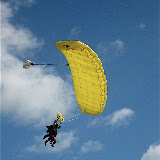
It is absolutely terrifying to look down at the world, knowing that you’re about to jump into the space between. The first 40 seconds are spent in a “free fall” in which you do just that – spiral and dive through the air, testing gravity and all the other physical laws of the planet. After those 40 seconds fly by (literally!), the chord is pulled and the parachute bursts open, pulling you back up and stopping all the noise in the world. For a few short minutes you float down, twisting and turning so that you can see all the scenery – mountains, ocean, rivers, roads, and people. But the most sublime part of the jump is the absolute silence that exists once the parachute opens. The world is so peacefully quiet – so silent that I could whisper and be heard. The vast world below is a solid reminder that we are all just a very small part of it all. A cool place to hang out, and a memory I will never forget.


Floating through a cloud on the way down was incredible. Paired with the silence, it was like traveling through a whiteout and losing complete sense of which way is up, down, left or right. When we broke through on the other side I could see Shannon as she prepared to land on the field.

The most hilarious part of the trip occurred after landing. Shannon and I reunited as successful skydivers and she confessed that as soon as she started falling through the air, the head cold she’s been dealing with over the last few days leaked out of her nose and across her face (and even onto her tandem partner). I laughed so hard as I watched her pick the line of dried snot off her cheeks!


In the end, I challenged myself and my comfort zone. I did something that I never thought I would actually do. I figure that the very short amount of time I gave myself to make the decision to jump prevented me from talking myself out of it. Plus, I knew that an opportunity like this would never happen – a beautiful day in NZ, surrounded by good friends and quality professionals. The whole thing rendered me speechless and reminded me that risks are worth taking.

So thanks, mom and dad, and grandma and grandpa, and grandma...you're birthday money was well spent!

Until the next adventure,

Larissa