Afoot and light-hearted, I take to the open road,
Healthy, free, the world before me,
The long brown path before me, leading wherever I choose.
Henceforth I ask not good-fortune—I myself am good fortune;
Henceforth I whimper no more, postpone no more, need nothing,
Strong and content, I travel the open road.
- Walt Whitman, "Song of the Open Road"

Where Am I Today?

Teaching at the old Alma Mater.

Sunday, June 24, 2007

The Trail to Thailand


Our time in Malaysia is coming to a quick close as we spend our last ringgits and pack our bags for the beach. Our one-hour flight from Penang (Malaysia) to Phuket (Thailand) today officially marks the end of our Malaysian travels and the beginning of our Thailand adventures.

It would be very difficult to sum-up Malaysia. Even though I've only been here for 12 days I feel like I've seen quite a variety. The evidence of British colonialism peeks through the strong Islamic, Chinese, and Indian cultures and it seems as though this country is able to embrace the cultural and religious differences that are as flavourful as the variety of foods from the street vendors.

We've seen Kuala Lumpur, Melaka, Cameron Highlands, Ipoh, Alor Setar, Langkawai, and
Penang. Off to Phuket, Thailand tomorrow.

My least favourite part about Asia so far are the toilets. Pictures and details to come.

I'm having some difficulties uploading pictures at this internet cafe, so keep checking back for new albums.

Thanks for reading,

L.

Thursday, June 14, 2007

Meeting up in Kuala Lumpur


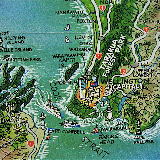
Destinations: Kuala Lumpur, Melaka, Ipoh, Cameron Highlands (not shown on this map -- east of Ipoh), and the island of Penang (capital city = George Town).

After much anticipation (and many hours of travel!) I met up with Erin and the train station in Kuala Lumpur and we've been catching up on life for the past few days. Erin has been in Malaysia for the past 6 weeks on a work study internship through the University of Lethbridge, so months ago we decided we would celebrate the completion of our university qualifications with some sightseeing in Asia. We're traveling with a skeletal itinerary in mind, but have big dreams about seeing this part of the world.


Erin and I, checking out the infamous Petronas Towers from the viewing window at the top of KL Tower. Erin and I took the elevator up the KL Tower to check out the panoramic views of the city. KL extends as far as the eye can see...skyscrapers, mosques, temples, playing fields, busy streets, schools -- the city is constantly moving. The weather is hot and humid, and the mid-afternoon is punctuated with thunderstorms. Flash floods are common, and Erin and I saw this first hand when we tried to leave the KL Tower.

A little bit about KL
Kuala Lumpur represents the heartbeat of Malaysia, serving as its cultural, commercial and transportation centre. It all began in the middle of the 19th century when a group of tin prospectors came to settle around the convergence of the Klang and Gombak rivers. It is a booming metropolitan centre with more than 1.3 million people from a variety of religious and cultural backgrounds. The ethnic majorities include Malays, Chinese, and Indians, and this diversity is clearly seen in the various cultural customs, religious beliefs, languages, cuisine, and architecture. The local currency is a ringgit (RM) and approx. 3 ringgits = 1 Canadian dollar. Food is cheap...a delicious meal costs about RM5, an LRT ticket costs anywhere from RM1 to RM3, and knock-off merchandise is cheap (if you're a confident barterer!)


While we were waiting for the afternoon downpour to stop we had our hands painted green and added our Canadian imprint to the local environmental awareness campaign.

We have been staying in Chinatown -- a beaming example of sensory overload. I flavourful taste of spicy Malaysian food - curries, chilies, spiced meats, etc. and there evidence of people as far as the eyes can see -- buildings, cars, motor bikes, garbage, and just people out and about. The sounds of car horns, fast trains, humming air conditioners, pouring rain, and people trying to barter fill the air. The humidity in the air clothes stick to bare skin, and the smells are almost too abundant and diverse to mention...varies from tantalising spices to down-right awful -- like rotting garbage, fish food, and wet dog. I've seen a few rats...eek! and a LOT of stray cats.


Keeping up with current events.


Yesterday Angus (another KL intern's visiting brother) and I checked out the Central Market and then hopped on the RapidKL (LRT) and got lost in the 6 floors of shopping madness at the KLCC shopping centre. Attached to the KLCC are the infamous Petronas Twin Towers -- architectural masterpieces that make KL's cityscape easy to identify. It's free to go across the observation bridge, however, they only let 1000 people visit each day, and the lineup for tickets in the morning is absolutely diabolical. Angus and I just took a view from the park space outside the towers, and Erin and I will try to get tickets on Monday.


More to come from Malaysia...

L.

Tuesday, June 12, 2007

A New Look for a New Leg


Singapore's Changi Airport is an amazing accomplishment in retail therapy and relaxation. I disembarked yesterday at 6pm local time and snooped around before checking into the transit hotel at the airport.

Last night I was on sensory overload -- drawn to the shops like a moth to the light. Perfume, cosmetics, liquor, and electronic gadgets galore -- this place has it all! Gucci, Prada, Burberry, Coach, Omega, Tiffany...and 7 Eleven! Not to mention beautiful gardens and green space in and out of the airport. Plus, a swimming pool, saunas, workout facilities, napping beds, and free internet (XB0x 360 too!). There's something for everyone and their credit card.

After walking around for a while I realized I was turning into a zombie, so I headed back to the transit hotel and fell asleep to some Asian TV.

My Singapore Airline boarding pass holds many perks -- one of which is the free city tour which was noted as "the only free thing in the city" by our hilarious tour guide. We stepped into a huge air-conditoned coach with leather seats (and seatbelts!) and worked our way through the diversity of this budding city.

Singapore is a small island country with lots of people and not enough room. Therefore, there are lots of highrises and the country buys 50% of its water from Malaysia because there is no more physical space to add to the existing 15 resevoirs. Singapore has an equatorial climate, thus there are no dramatic seasonal shifts and the temperature remains near the 30 degree mark year-round. It's also really humid because it rains a lot. Chewing gum is illegal and the crime rate is 0.007% -- and considering the diverse mix of cultures and religions, Singapore has been without political, racial, or religious riots for over 20 years. Despite the 4.6 million people who live in this city the traffic wasn't as diabolical as I was anticipating...and it seemed as if there was a suspicious lack of people out in the city.

I'm just waiting to catch my flight to Kuala Lumpur to meet up with Erin...so check back in a few days for some Malaysian memoirs!

Thanks for reading,

L.

Monday, June 11, 2007

Sumner Sunrise


In my last few days I'm taking some time to really absorb my surroundings. With the natural chaos of a teaching life, plus hosting my mom and trying to do some sightseeing, along with saying proper "goodbyes" to everyone, I've been up to my eyeballs with a "to do" list that mutates faster than the Bubonic plague. I got up early this morning to get to school before the rush and was taken aback by the beautiful sunrise over Sumner Beach. There were heaps of people out, but the sound of the morning waves prevailed over the "ooohs" and "awwws" of this stunning sunrise.

How lucky am I to have spent my last two months 20 feet from this? Can't wait to come back...

L.

Do What Inspires You


I think I will adopt this slogan as my offical trip manifesto...short, sweet, and perfectly accurate. The poster is plastered to a billboard column across the street from the Christchurch Arts Centre.

New Zealand has been in the works for over a decade -- can you believe it?!? It started as shapeless goal that became more precisely defined as years passed and knowledge grew. I knew I wanted to be a teacher from a very young age, but it wasn't until I was in junior high school that I began flirting with the idea of teaching and living overseas. I vascilated between a few different ideal destinations, but hit on New Zealand for some unknown reason when I started my teacher training five years ago. It's interesting how some places call our hearts more than others, and until I came here I couldn't really articulate a specific reason for choosing New Zealand over any other place on the planet. But after meeting all these wonderful people and travelling around these roads I couldn't imagine it any other way.

I started looking into New Zealand with serious intention during my first year at the University of Lethbridge and narrowed down a city. During this time I found out that others were planning on heading to NZ as well, but details were still blurry. Things really started coming together in July 2006, and I was blown away by the fast response I received from Avonside after my first inquiry.

So many people have asked, "why New Zealand?" and I still marvel in the sublime realisation that I am actually here, living through a long-term goal. It's been a really powerful teaching tool in the classroom because it's a good example of working through the challenges of goal setting and reaching. It inspires me to continue teaching and learning from all the active minds around me.

So as I get ready to wrap things up with my students I will leave them with this message, because I can back it up with an example that has been unbelievably gratifying and life-changing, and if anything it only inspires me to set higher goals that challenge me in my personal and professional life.

Newton's laws of motion, acceleration, and balance play a huge part in both the physical and emotional world. It's hard to ignore how these laws can be applied to inspiration -- just even thinking about how forces act on the body and mind. I propelled myself across the Pacific into a huge question mark, and I'm about to do the same as I prepare to travel Southeast Asia. Who knows what events will occur, what will make me laugh or cry, and who I will meet along the way...but it's so awesome to remain open to the wonder of it all...

Thanks for reading.

L.

"Stories Have a Job to Do" Recommending Mister Pip


Over the term break I was determined to read some contemporary New Zealand fiction. I voiced my intentions to the open ears in the English department and was flooded with suggestions. Ruth, my right-hand kiwi-lit enthusiast was quick to mention Mister Pip, a novel by New Zealand writer Lloyd Jones. I've been meaning to blog about it but kept putting the task on the blog back-burner. The final spark to get things moving was the announcement of its recent prestigious award, The Commonwealth Writers' Prize 2007: Overall Best Book Winner

One of life's most welcome gifts is finding a good book to read. We all take a gamble with our library cards and credit cards when choosing new reading material, but the payoff is priceless when we find that stack of pages that we cannot put down. We read at every possible moment -- on the bus, at interval, through the weekend, into the weee hours of the night (and I've even set my alarm clock to wake up early after a late night of reading!). Totally engrossed, involved, and enraptured. That's a good book.

Mister Pip had me roped me into the scenery and history of the Solomon Islands and inspired me to hunt down a copy of Great Expectations by Charles Dickens. I could not put down the story of Matilda's life.

Here's what the publisher has to say:

Lloyd Jones’ new novel is set mainly in a small village on Bougainville, where Matilda attends the school set up by the only white man in the village, Mr Watts. By his own admission he’s not much of a teacher and proceeds to educate the children by reading them Great Expectations. Matilda falls in love with the novel and the promise of the next chapter is what keeps her going; Pip’s story protects her from the horror of what is happening around her – helicopters menacing the skies above the village and rebel raids on the ground.

After several visits to the village by soldiers, the book goes missing and is then destroyed. Mr Watts encourages the children to retell the story, the whole being constructed from their remembered fragments. Later, when she has fled the island for Australia, Matilda reaches for a copy of Great Expectations in the school library and realises that Mr Watts was reading them his own version of the text, another ‘invention’ of the original.

"Mister Pip" is a love song to the power of the imagination and of storytelling. It shows how books can change lives.


Mister Pip is not yet available in Canada (according to Chapters.ca), and thus I feel slightly privileged to have caught a glimpse of the future (which makes up for the frustration of the repeat television series!). I love this book for its beautiful language -- steeped in metaphors and sensory description it has taken me on one of the most memorable journeys in my readers' mind.

I haven't been able to turn the "English Major" switch to "off," so during my reading I kept note of some of my most treasured passages. May they serve to heighten your interest in the story of Mister Pip.


"A book gives you permission to change your life" (p 135)

"Stories have a job to do. They can't just lie around like lazybone dogs. They have to teach you something" (p 75)

"My sense of time was governed by the school year -- when term began, when it ended, the holidays between" (p 10)

"I want this to be a place of light" (p 14)

"The surprising thing is where I found him...in a book. No one had told us kids to look there for a friend. Or that you could slip inside the skin of another, or travel to another place..." (p 20-21)

"As we progressed through the book something happened to me. At some point I felt myself enter the story" (p 40)

"The forge was home: it embraced all those things that give a life its shape. For me, it meant the bush tracks, the mountains that stood over us, the sea that sometimes ran away from us...it was the jungle and its constant reminder of how small you were, and how unimportant, compared to the giant trees and their canopy's greed for sunlight" (p 46-47)

"If everything we did made sense, the world would be a different place. Life would be less interesting, don't you think?" (p 80)

"A dream is a story that no one else will get to hear or read. Thanks to dreams, in the history of the galaxy the world has been reinvented more often than there are stars" (p 160)

"Dreams are nervy things -- all it takes is for one stern word to be spoken in their direction and they shrivel up and die" (p 165)

"I only knew the man who took us kids by the hand and taught us how to reimagine the world, and to see the possibility of change, to welcome it into our lives. Your ship could come in at any time, and that ship could take many forms" (p 211)

"My Mr Dickens had taught ever one of us kids that our voice was special, and we should remember this whenever we used it, and remember that whatever else happened to us in our lives our voice could never be taken away from us" (p 220)

"We have all lost our possessions and many of us our homes," he said. "But these losses, severe though they may seem, remind us of what no person can take, and that is our minds and our imaginations" (p 107)

"No one in the history of your short lives has used the same voice as you with which to say your name. This is yours. Your special gift that no one can ever take from you" (p 108)


I'm gearing up for the next leg of my trip and will be reading Great Expectations with thoughts of Mister Pip and the Solomon Islands on my mind. I'd love to hear your thoughts on the story should a copy find its way into your hands.

Thanks for reading.

L.


Friday, June 1, 2007

An Intern Teacher's Final Report


The final assignment for this internship is a written report that reflects upon my teaching experience. This document presents my thoughts and incorporates reports from my Teacher Mentors, Administrator, and Faculty Mentor. The following excerpt is from my section of the report.

Introduction
He Whakatauki
Ka tangi te Tītī,
Ka tangi te Kākā,
Ka tangi hoki ahau,
Tīhei Mauri ora!

He mihi aroha kau ake ki a koutou ngā kaiwhakaako. Tuatahi māku ka tuku te mihi atu ki ngā kaiwhakaako o t e Whare Wānanga o Lethbridge Tuarua ki ngā kaiwhakaako o te kura tuarua o Otakaro mai i Otautahi ki Aotearoa.
Nā koutou i hikitia tēnei kaupapa ka taea e au ki te tūtuki i ngā whāinga i mua.
Nō reira, kei te mihi arohanui ki a koutou katoa!


A Proverb
This is the cry of the Tītī,
This is the cry of the Kākā,
This is my cry.
Tis the breath of life!

Greetings of love to all of the teachers.
First, from the University of Lethbridge,
second from teachers of Avonside Girls’ High School, New Zealand.
You have all lifted me so that I was able to reach my goals that were in front of me.
Therefore it is with much love that I greet you one and all.


The journey to Avonside Girls’ High School in Christchurch, New Zealand has been a memorable learning opportunity. It has been about teaching, living, learning, traveling, exploring, and pushing personal limits. It has been about challenging myself to become a better teacher for myself and for others.

I chose Avonside for a number of reasons, but those at the top of the list include: working in an atmosphere of tradition and reputation; first-hand experience in a single-sex educational environment; and an opportunity to immerse myself in the culture and geography of New Zealand. These features forged a steep learning curve that I wanted to climb because I knew it would make me a better teacher.

For the duration of my fifteen-week practicum I have been under the mentorship supervision of Tom Joel and Anna McNeill, and have also been privileged to receive the support of an experienced English department and a welcoming staff. I have been responsible for the delivery of English course material at three curriculum levels: Year 9, Year 10, Year 11 (NCEA Level 1), and have taught units on poetry, short stories, film studies, a novel study, creative writing, and Romeo and Juliet. It has also been my responsibility to prepare and evaluate senior students for two internally assessed national standards in media presentation and creative writing.


Classroom Organisation and Management of Student Behaviour

It is my belief that a classroom must be a purposeful learning environment. There is a need for good routines, procedures, and variety in teaching and learning strategies. Since I started a new school year with my students, I found myself in constant consideration of best practices in terms of organizational structure. Also, being in a different country created a bit of gray area in terms of acceptable and appropriate methods for organization and discipline, therefore it was imperative that I communicate with my colleagues whenever I was unsure of procedures.

I have learned that in order to be an effective teacher I must have my classroom organised physically and strategically. In the early weeks of Term One classroom management was difficult because I was still learning names and personalities. I have practiced being firm, but kind, when dealing with assignments, deadlines, and disruptive behaviour.

Planning and Preparation
Navigating a new curriculum and a new education system has marked a very steep learning curve. It was not until mid-way through my practicum that I really felt I could make sense of the curricular framework enough to explain it to someone else.

My official timetable was decided just a few days before I stepped into my classrooms. As a result, I had an overwhelming sense of being behind right from the beginning. I need to remind myself that not every lesson I teach has to be self-created – there is something to be said for “tried-and-true” lessons and practices. My generation of teachers has grown up with the Internet as a powerful teaching tool, but even though technology is intended to make our teaching lives easier, it too can be time-consuming and an overwhelming burden.


Techniques of Instruction
When planning my lessons and units I tried to follow a practical instructional model: enter→explore→extend. Conceptualizing this progression proved to be successful in ensuring that material was introduced and explained, and in many cases that real-world relevance or current events could help extend and relate the content to the context of a student’s life.
I think that varying methods of instruction keeps students (and teachers!) engaged. Alternating between student- and teacher-led discussions, and integrating differentiated, cooperative learning strategies such as jigsaw/expert groups can produce some powerful results. I kept a copy of Bloom’s Taxonomy close to my planning books to help me formulate assignments with graduated complexity.

Evaluation of Student Learning

One of the overarching challenges of this final internship has been the need to learn a new education system, especially curriculum and guidelines for assessment. On the same token, it has been a challenge that I will likely experience again in my career. The New Zealand Qualifications Authority (NZQA) requires that students achieve specific standards in their educational assessments. Learning and planning with this in mind was a task that got easier as I became more comfortable with the standards associated with the curricular objectives.

As the primary teacher for my students I was responsible for preparing the first round of reports on student progress. Because these reports went home before any major assessments, the feedback focused on observations of attitude, organizational habits, attendance, and participation. The build-up of marking and observation prior to reports was a sturdy reminder to stagger due dates for assignments. I was also responsible for meeting parents on designated Parent-Teacher Interview evenings to discuss the report results. Anticipation for these brief five-minute time slots was nerve-racking, but it was helpful to steer the conversation around qualitative results and set goals that involved home and school.

Personal and Professional Attributes
After four practicums at the high school level I still firmly believe that I am best suited to teach junior and senior level students. Not only do I enjoy the age group, but the curriculum is extensive and engaging and allows the teacher to plan with personal strengths in mind.

Professionally, I view my strengths as directly related to my passion for English. As a teacher I am in a unique position to use both my knowledge and life experiences as teaching tools to make course content accessible and relevant. Teaching at an all-girls school provided me with an opportunity to question how I was going to empower female students to be independent and self-directed young women who are global and critical thinkers, while at the same time reminding them it is through literature and interaction that we learn about ourselves and the world that surrounds us.

Teaching is about much more than just blocks of instructional time and lesson plans -- it is about everything that goes on in and around the classroom: successful and not-so-successful lessons, improvisations, and the moments of engagement that spark discussion and learning that did not formerly exist on any written plan. Being in–tune with the rhythm of the class has allowed me to grab hold of teachable moments and run with the natural electricity generated by genuine student interest.

Summary

This professional internship has reminded me of the two-part objective of an international experience: to teach and to learn. My learning has taken place beyond the walls of a conventional classroom – in conversations with colleagues, chaperoning school trips, and embarking on road trips. I have seen this country with my own eyes, met some of its most amazing people, and challenged my comfort zone.

I realize that teaching is not only an occupation propelled by the need to transmit and acquire knowledge, it is also about fostering compassionate, respectful, and trusting relationships with students, colleagues, and other human beings. It is a profession that encourages ongoing inquisition and constant adaptability. This international experience has been a powerful reminder that teachers must first be learners, and that travel is an excellent and worthy investment. A rich travel life is an invaluable teaching tool and I hope to bring to my future classrooms a knowledge and awareness of the world that will positively influence and enrich my teaching.

This internship concludes a five-year post-secondary study in Education. From the first step in 2001, I have climbed a steep learning curve and stopped at intervals to look back at the ground covered. The journey has been full of peaks and valleys, plateaus and steep inclines. Along the way I have learned that it is easy to travel with tunnel vision – looking for and focusing on the obstacles that may stand in the way and pose a potential risk – but it is more rewarding to look up and around to take in the whole view and see how the last leg of the trip has helped get me to the place I am currently standing. In the grand scheme of my career this internship is only one of many base camps on a mountain larger than Everest, but with perseverance comes improved strength and confidence and more magnificent views.

Kia ora.


Thanks for reading.

L.